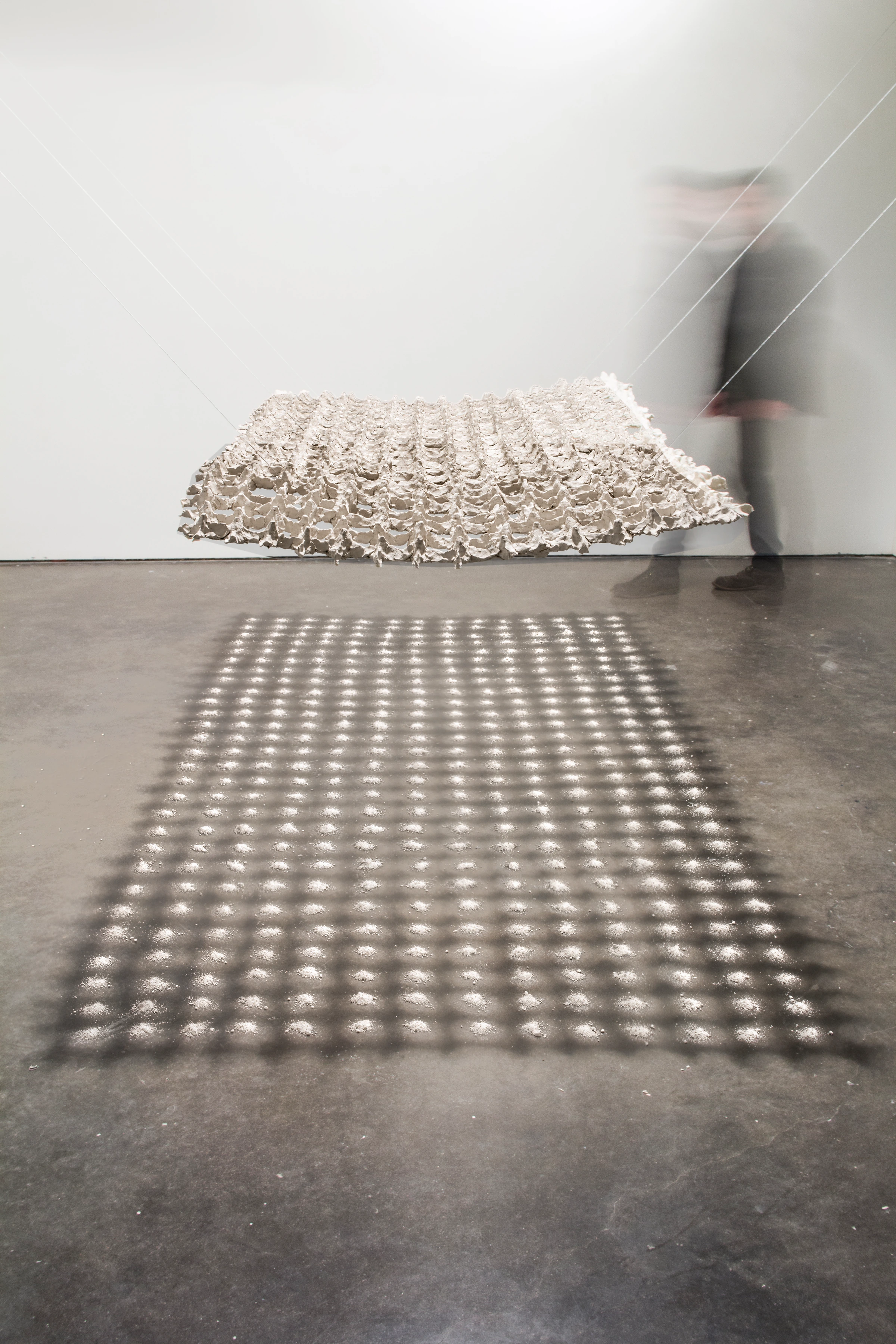
carapace, 2019, porcelain, cascarilla, 4x8'
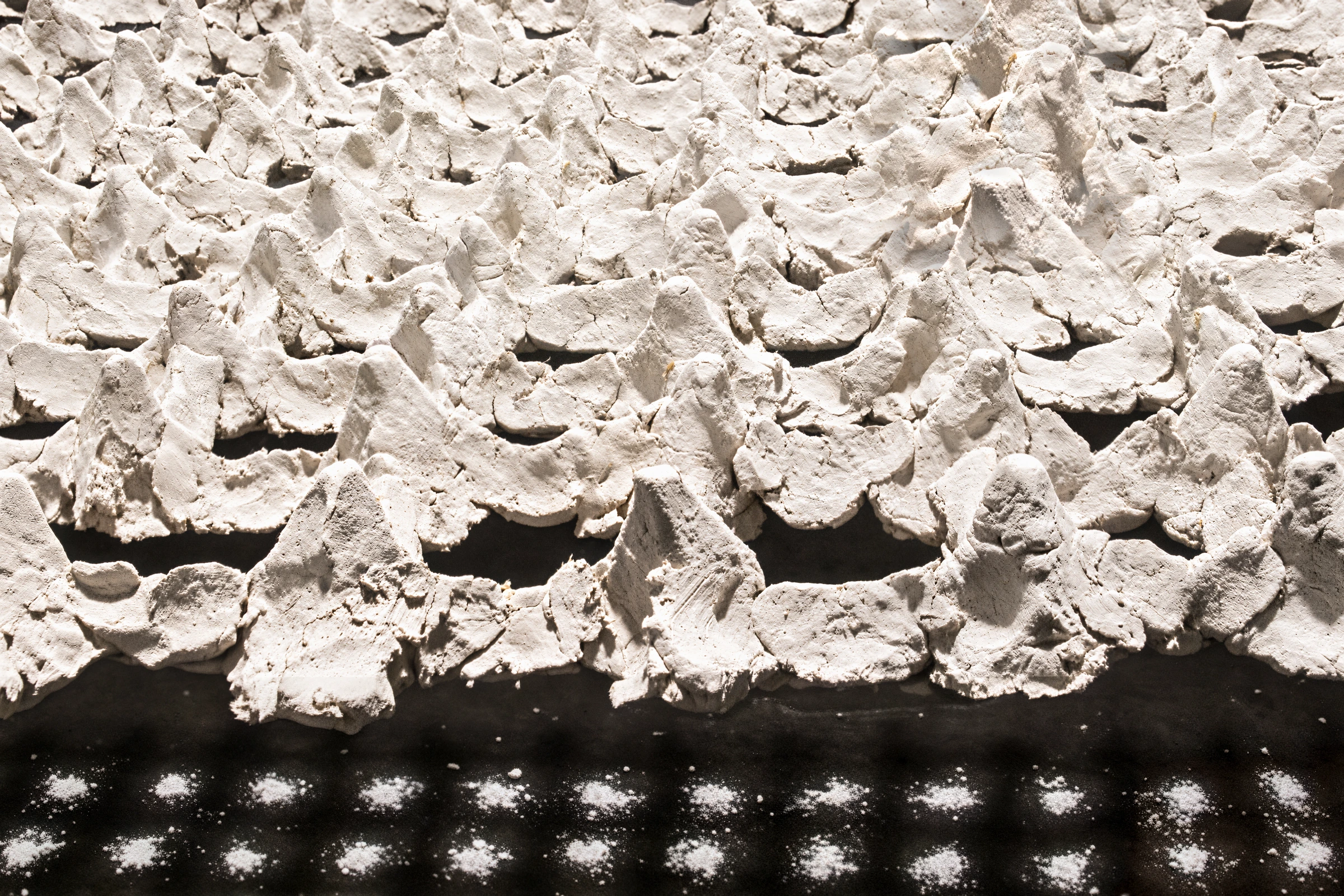
carapace, 2019, porcelain, cascarilla, 4x8'
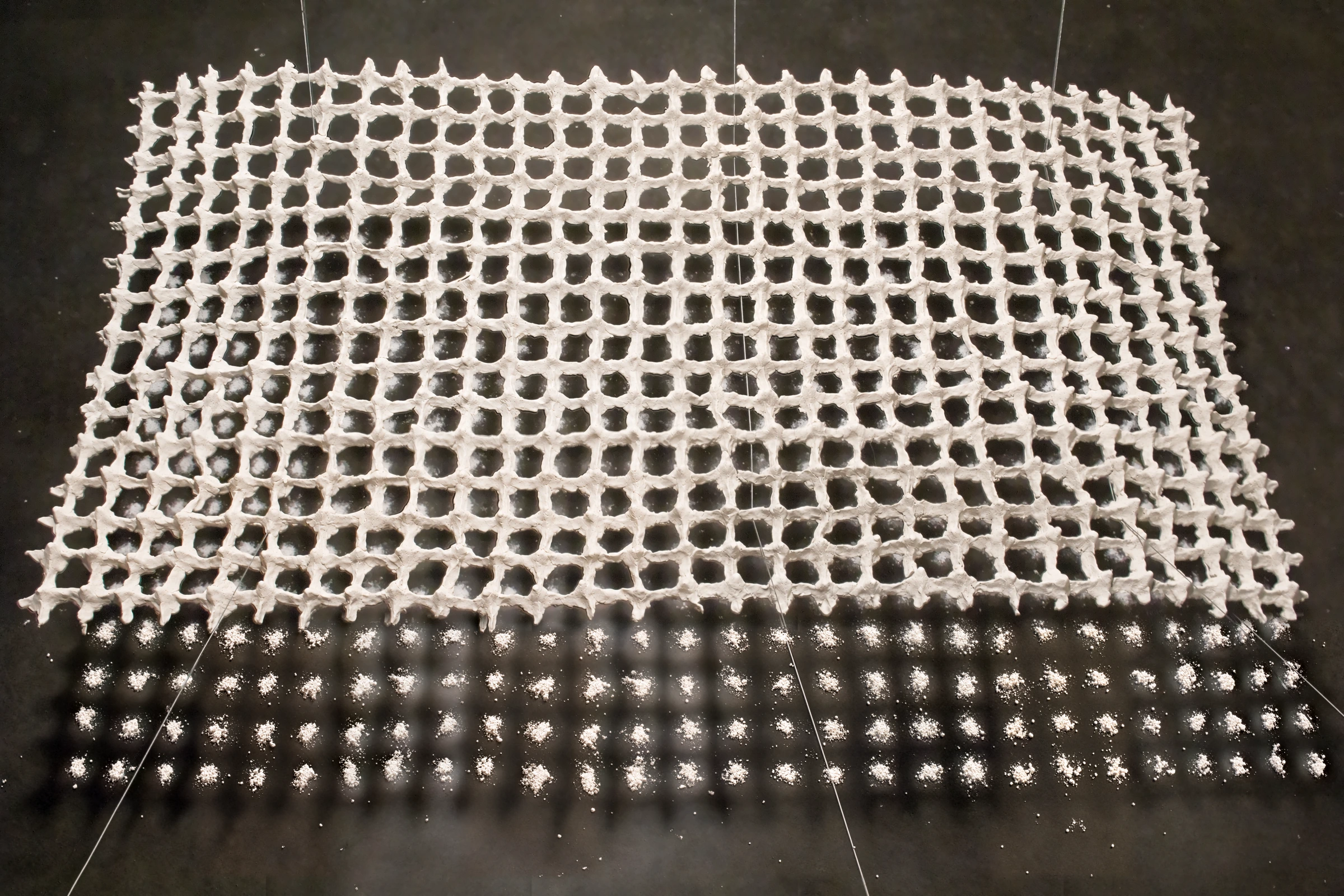
carapace, 2019, porcelain, cascarilla, 4x8'
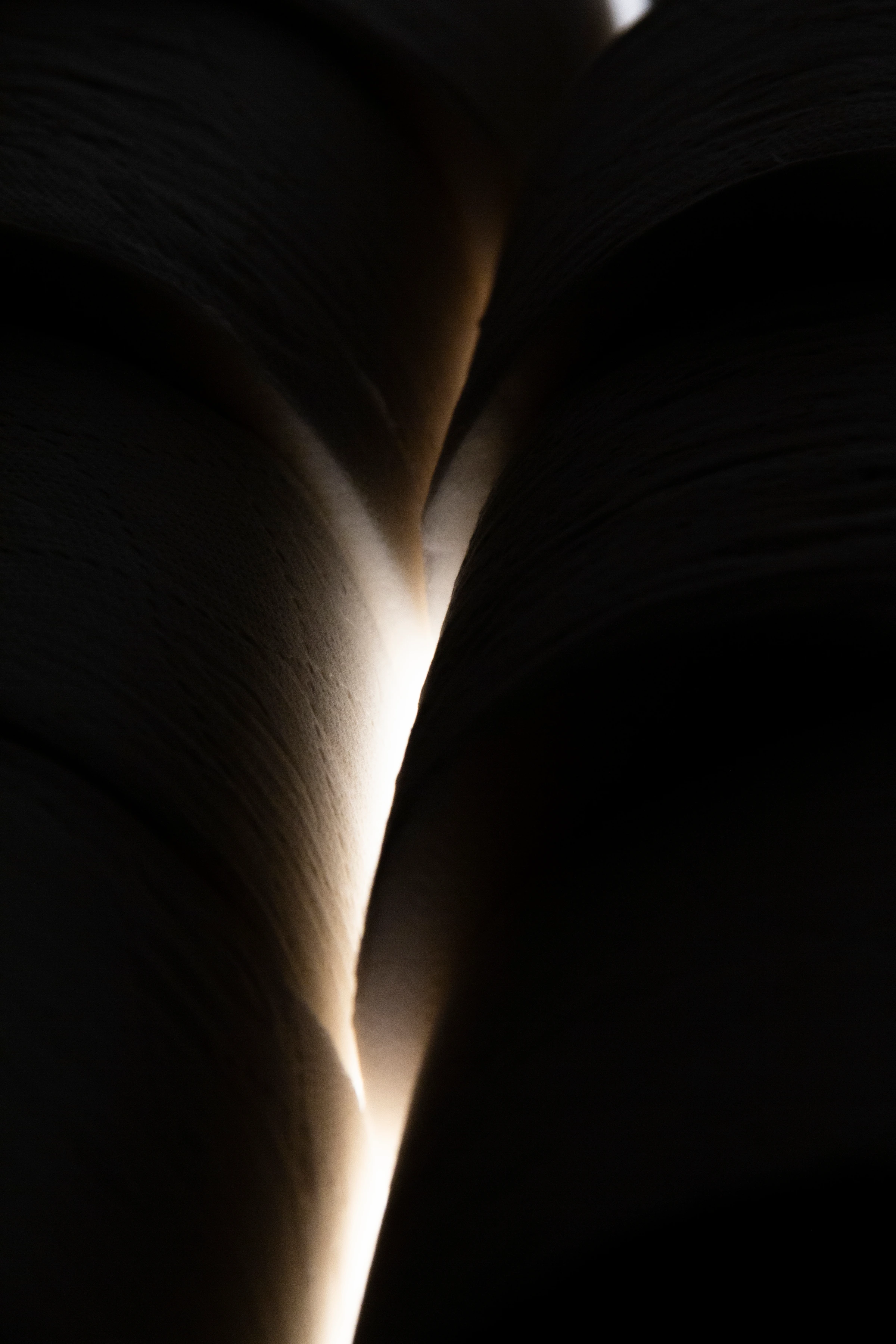
crevice 1, 2021, toilet paper photograph
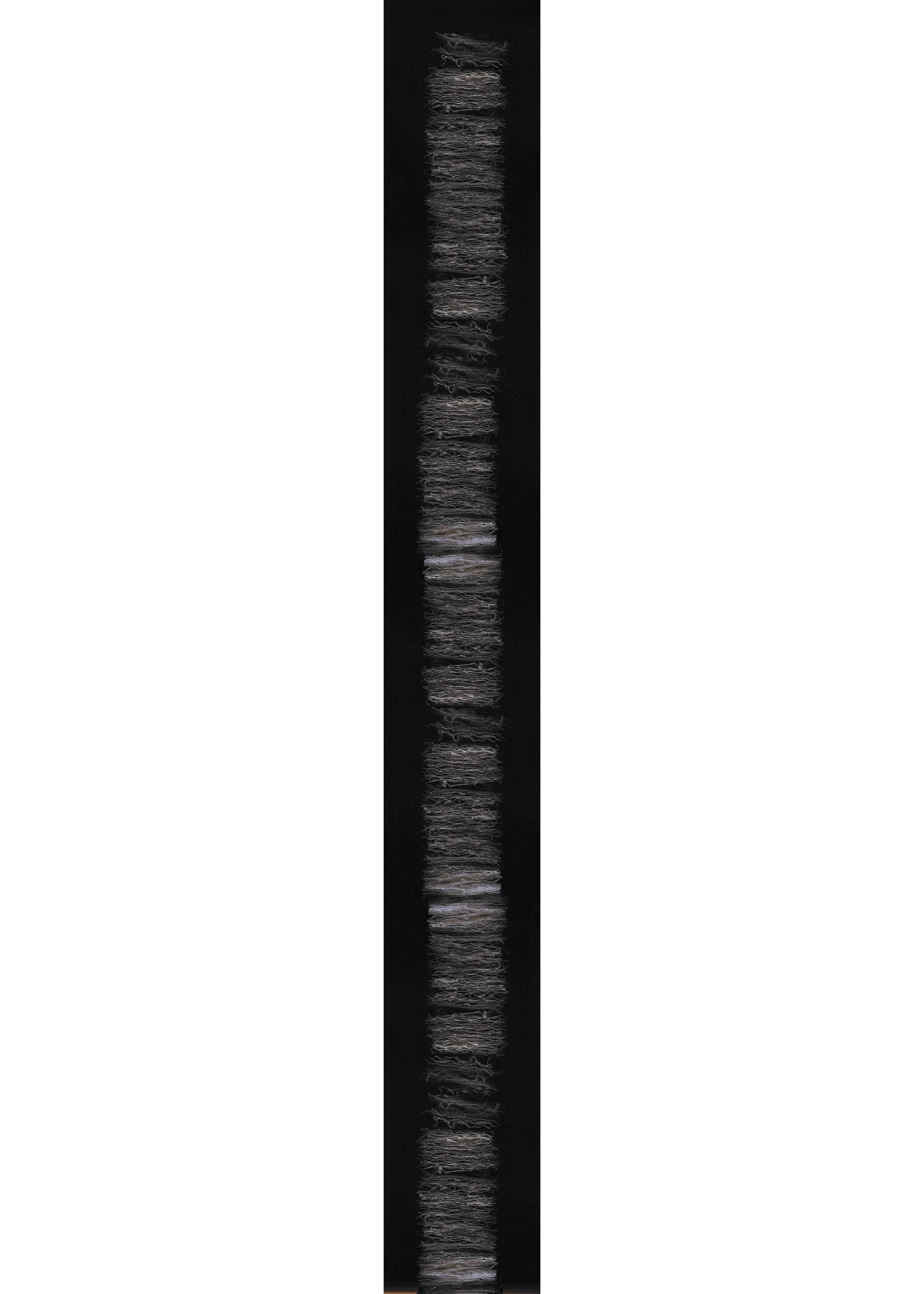
lamellar, 2020, toilet paper scans, 72x6"
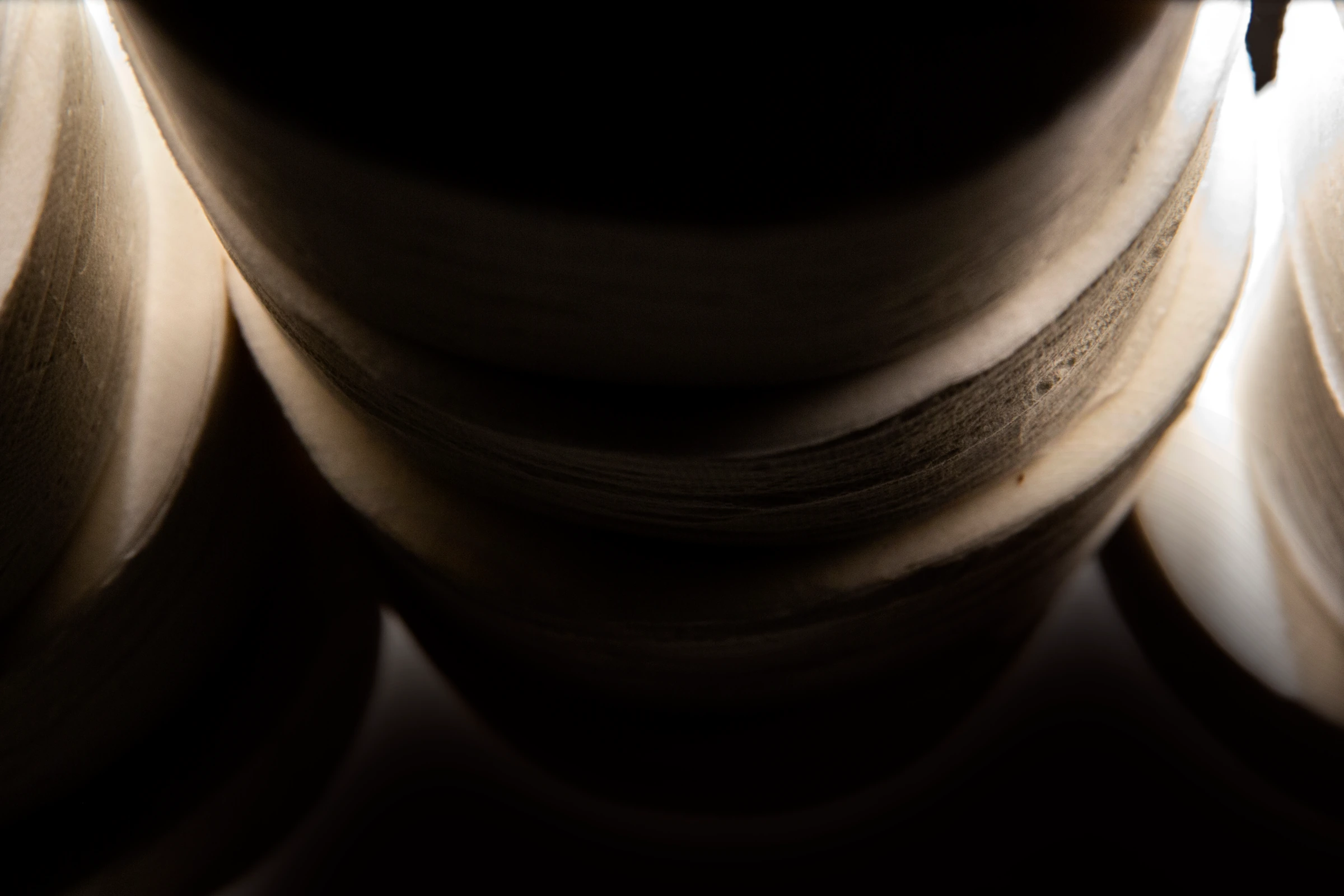
crevice 2, 2021, toilet paper photograph
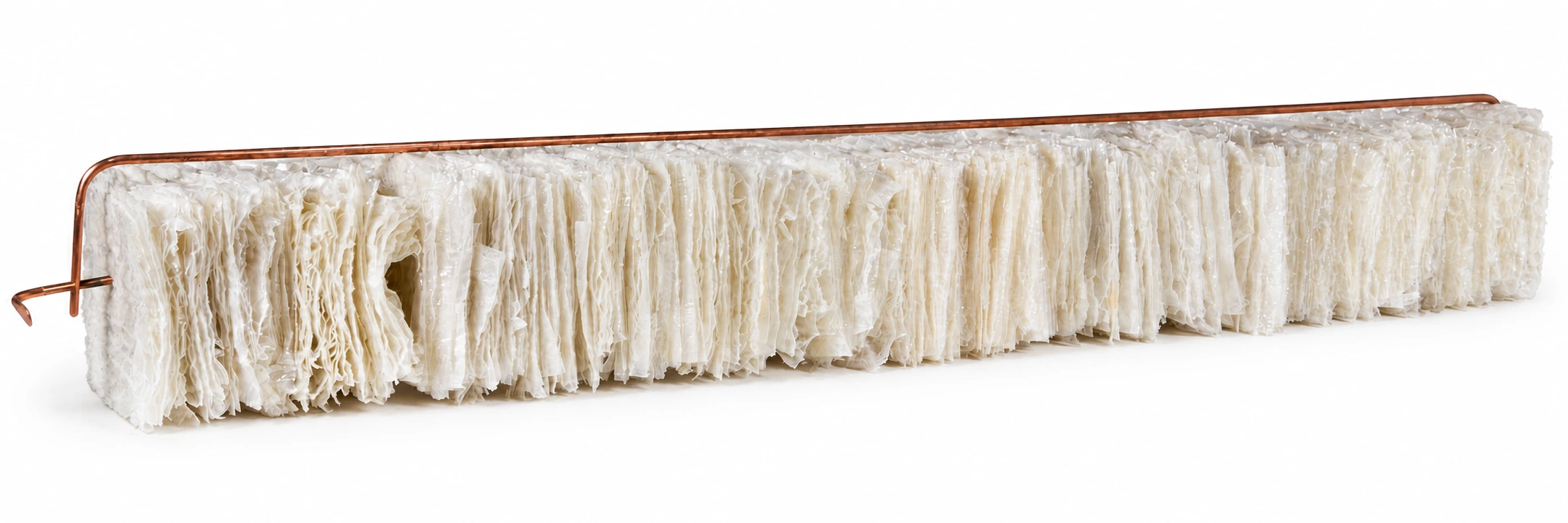
laminate 1, 2021, toilet paper, resin, copper, 30x4x4"
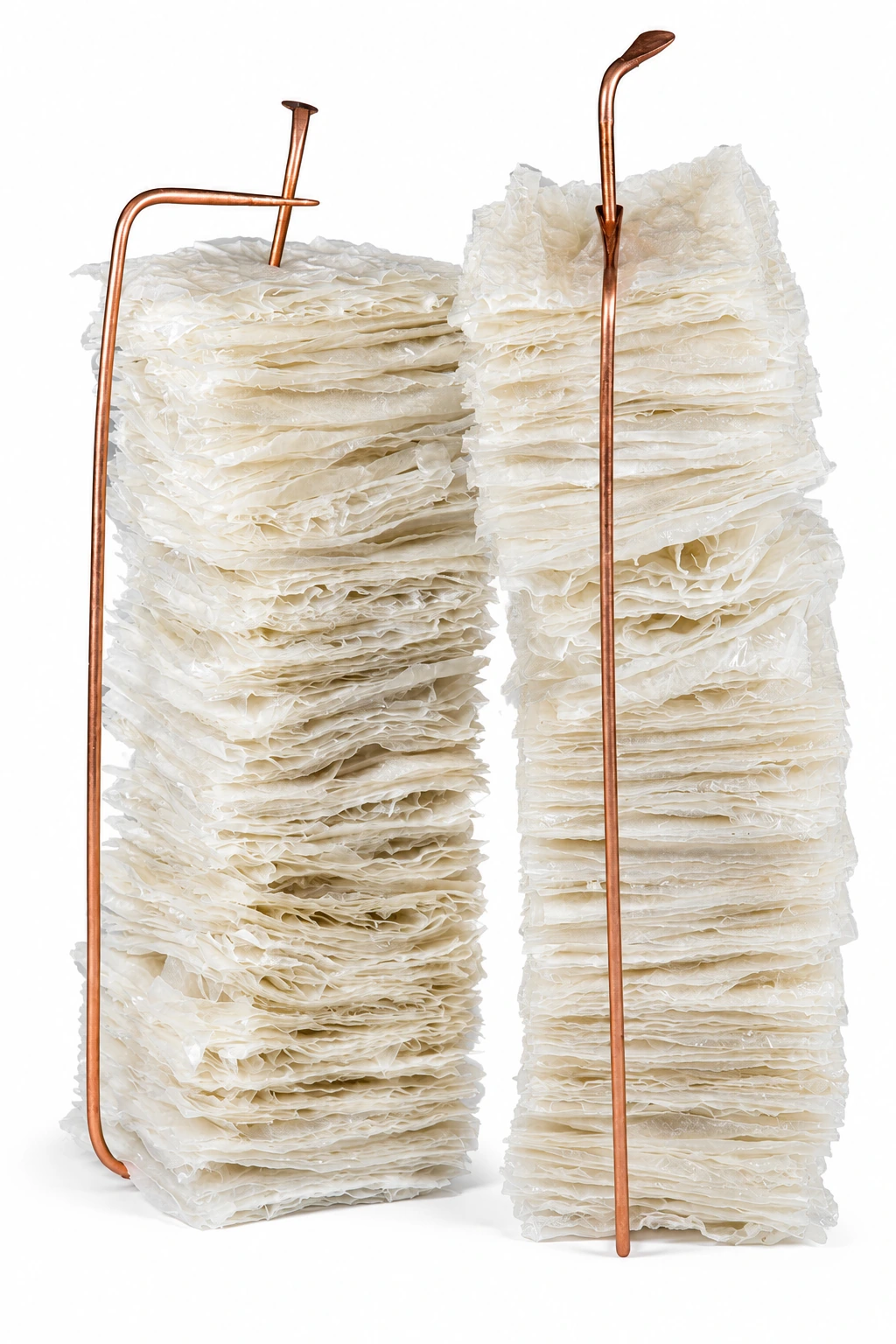
laminate 2, 2021, toilet paper, resin, copper, 15x4x4" each
In Carapace, I mix porcelain with cascarilla and impress the material into egg cartons, connecting the impressions with passages of the mixture to create a grid suspended in the middle of an exhibition space. The egg cartons are made to hold and protect eggs, though I use their pyramidal forms for their architectural strength. The suspended grid rocks back and forth as it is pushed, while light from above casts a larger grid of shadows onto the floor. I sift cascarilla into the illuminated openings between the shadows, marking the places where light passes through the porcelain grid. A carapace might protect a body from what surrounds it, though it also participates in how that body encounters the world beyond its covering. In Crevice, I stack rolls of toilet paper on a clear table and shine light from above into a dark room filled with smoke. The rounded rolls leave crevices between them, permitting light to seep through the stacks, its beams softened by smoke. A crevice might open between materials pressed together or separated, offering a place for something to enter, pass through, or hide. In Lamellar and Laminate, I unroll toilet paper and dip strips into resin, hanging them from my studio ceiling to cure. I cut the hardened strips into squares at their perforations, then stack and attach them with more resin. The paper acquires a warm, slightly yellowing translucency that catches the light like the reflective layers of schist. In Lamellar, I scan the stacks, creating thin, ghostly outlines of their layers against the dark. Lamellae can form the plates of a protective shell or the thin layers of stone. In Laminate, I heat and hammer copper wire into clamps that compress the resin-hardened paper together. The copper presses against the layers, holding the paper in a form that is no longer easily separated at its perforations. I wonder how a carapace might be constructed from materials intended to be separated or discarded, and how pressing them together changes what they can hold or protect.